
India’s Tech Dependence on USA: Why It Is a Problem & What India Must Build Now

Last Updated on April 20, 2026 2:13 pm by Rohit Gadhia
Here is a question worth sitting with for a moment.
If the United States decided tomorrow to cut off India’s access to Google Android, Microsoft Windows, and Amazon Web Services — what would happen?
Banking would freeze. Government systems would go dark. 500 million smartphones would lose core functionality overnight. Corporate India would grind to a halt. India’s tech dependence on the USA is sometimes a matter to think & need to bring change immediately.
This is not a hypothetical scare story. This is the documented reality of India’s tech dependence on the USA in 2026 — and it is a national security vulnerability hiding in plain sight.
India’s tech dependence on the USA is one of the most critical and underreported strategic risks facing the country today. We talk endlessly about military preparedness, border security, and economic growth. But the invisible infrastructure that runs modern India — its operating systems, cloud servers, chips, and social media platforms — is almost entirely controlled by American corporations.
That needs to change. And India has both the talent and the opportunity to change it. Lets discuss how we can reduce India’s tech dependence on the USA.
How Deep Does India’s Tech Dependence on the USA Actually Go?
The numbers from the Global Trade Research Initiative (GTRI) published in September 2025 are stark:
- 500 million+ Indian smartphones run on Google’s Android
- 25 million+ government and enterprise laptops run on Microsoft Windows
- 30 million devices use Apple’s iOS
- Microsoft Office, Exchange, and Teams dominate 20 million devices
- AWS, Microsoft Azure, and Google Cloud collectively host thousands of Indian workloads including fintech firms, e-commerce giants, and government platforms
GTRI founder Ajay Srivastava put it bluntly: India’s entire digital backbone could be crippled overnight if US tech giants pull the plug on Windows, Android, or cloud services.
We already have a preview of what this looks like. In 2024, a Microsoft service disruption temporarily blocked services to Nayara Energy — showing how a single corporate decision made in Seattle or Redmond can disrupt operations at a major Indian company. No Indian government approval required. No warning. Just gone.
And in March 2024, over 150 apps of Indian firms — including Naukri.com, Shaadi.com, 99acres, and BharatMatrimony — were delisted from Google Play Store for not paying Google’s demanded commission of 11–26%. Indian companies, operating in India, serving Indian users, held hostage by a platform headquartered in California.
This is not partnership. This is dependence. Let’s discuss more on India’s tech dependence on the USA.
The Semiconductor Problem: India Imports 90% of Its Chips (India’s tech dependence on the USA)
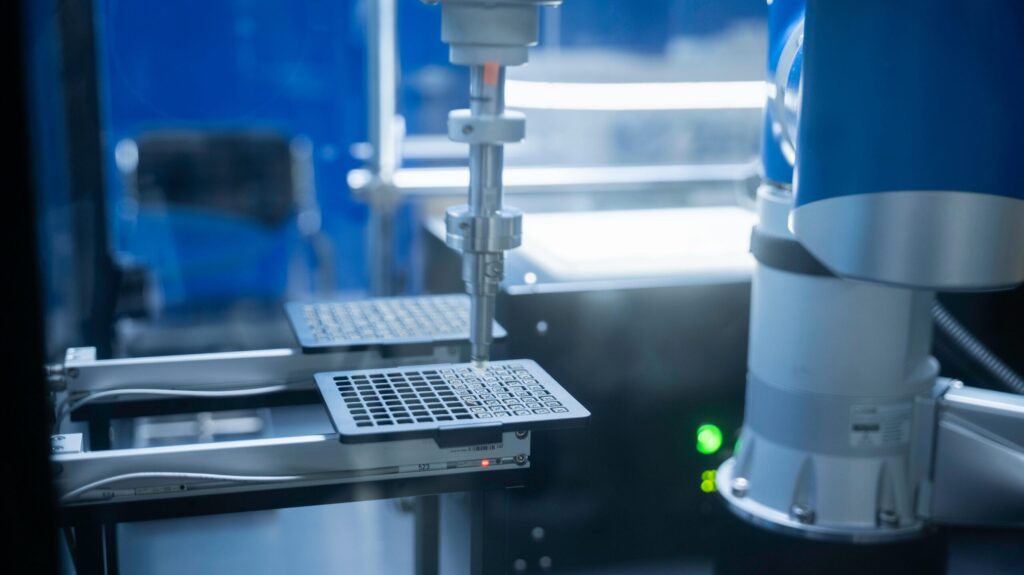
If the software dependence is alarming, the hardware situation is even more serious.
India’s IT sector generated $283 billion in revenue in 2024, accounting for 7.3% of the country’s GDP. Almost all of it runs on chips that India does not make.
Currently, India imports roughly 90–95% of its semiconductor components. In FY 2023–24, India imported $89.8 billion worth of electronic and telecom goods — with China accounting for nearly 44% of that total.
Think about that for a moment. India, which aspires to be a $10 trillion economy by 2035, does not manufacture the fundamental building blocks of modern technology.
The government launched the India Semiconductor Mission to fix this, with Tata Electronics and Micron both setting up facilities in Gujarat. But both projects are already behind schedule — Tata’s facility, initially planned for mid-2025, was pushed to April 2026. Micron’s Gujarat plant is expected to address demand only in the latter half of this decade.
Progress is happening. But it is slow — and the urgency is not matching the scale of the problem.
Why This Is a Strategic Risk, Not Just an Economic One
India’s tech dependence on the USA is not just a business problem. It is a national security issue.
Consider what happened to Huawei. In 2019, the US government placed Huawei on an export control list, cutting it off from American chips, software, and technology. A company with $100 billion in revenue was brought to its knees — not by a war, not by sanctions in the traditional sense, but by a technology cutoff.
China saw what happened to Huawei and accelerated its own “Delete America” policy — a programme to replace all foreign software and components in government, defence, and industrial systems by 2027.
India has no equivalent programme. Yet.
According to Grant Thornton India’s analysis, over 75% of SSL/TLS security certificates in BRICS countries come from US-based certificate authorities. In a geopolitical crisis, these dependencies could become leverage points — pressure tools in trade negotiations, or outright weapons in a conflict.
India learned this the hard way during the 2020 Galwan crisis with China, when the government scrambled to ban 200+ Chinese apps in response to border tensions. It was the right call — but it exposed just how vulnerable India’s digital ecosystem is to foreign political decisions.
The same vulnerability exists with American platforms. It is simply less visible because the US-India relationship is currently friendly.
The word “currently” is doing a lot of work in that sentence.
What India Must Build — The 6 Critical Areas
India’s tech dependence on the USA cannot be fixed overnight. But a clear, phased roadmap exists. Here is what India needs to build:
1. An Indigenous Operating System
India already has early foundations here. BharOS, developed by an IIT Madras-incubated startup, is an Android-based OS built for security and privacy without Google’s services. BOSS (Bharat Operating System Solutions), developed by CDAC, is a Linux-based OS already deployed in some government departments.
But these are pilots, not a national programme. India needs a funded, mandatory rollout of indigenous OS in all government and defence systems within 5 years — exactly as China has done.
2. Sovereign Cloud Infrastructure
Right now, AWS, Azure, and Google Cloud host critical Indian government and corporate data. India’s own MeghRaj cloud exists but is confined to limited government use.
Private initiatives are promising — Bhavish Aggarwal’s Krutrim AI Cloud launched in 2024, and Ola has already begun migrating from Microsoft Azure. Zoho, India’s most successful SaaS company, has announced three proprietary Large Language Models trained for business use.
But sovereign cloud needs to be a national infrastructure project — not just a startup bet.
3. Semiconductor Manufacturing
This is the longest-lead, highest-investment challenge. India needs its own chip fabs — not just assembly and testing plants.
CDAC recently unveiled India’s first homegrown processor, the DHRUV64 — a dual-core RISC-V chip built for 5G, automotive, and IoT applications. It is a modest start, but it is a start.
The real target must be domestic chip design at scale. India has world-class chip designers working for Qualcomm, Intel, and AMD — most of them based in Bangalore. The talent exists. What is missing is a domestic industry to absorb and deploy that talent.
4. Homegrown Social Media and Communication Platforms
This one is uncomfortable to say — but India’s public discourse runs on American platforms. Twitter/X, Instagram, YouTube, and WhatsApp are where India’s political conversations happen. These platforms moderate Indian content under American legal frameworks, not Indian ones.
India needs viable domestic alternatives — not to restrict speech, but to ensure that platforms serving a billion Indians operate under Indian law, with Indian data governance, accountable to Indian courts.
Koo tried and failed. But the idea was right. The execution and funding were insufficient.
5. A National AI Model and Data Infrastructure
The AI race is the most critical technology competition of this decade. India generates enormous amounts of data — but that data currently trains American and Chinese AI models, not Indian ones.
India needs a National AI Mission with serious funding for foundation models trained on Indian languages, Indian contexts, and Indian data — stored on Indian servers, governed by Indian law.
The Digital Personal Data Protection Act 2023 is a step in the right direction. But data localisation rules need teeth, and Indian AI infrastructure needs investment at the scale of a national project — not piecemeal startup grants.
6. Cybersecurity Infrastructure
India experiences more cyberattacks than almost any country in the world. Yet its cybersecurity stack is largely built on American tools — Palo Alto, CrowdStrike, Cisco. GTRI has called for public-private cybersecurity consortia to build indigenous security tools.
This is not about anti-Americanism. It is about not having your security infrastructure dependent on a country that may one day have interests different from yours.
But Wait — Isn’t the US-India Tech Partnership Actually Helping India?
This is a fair question and deserves a straight answer.
Yes — significantly. Microsoft has pledged $3.7 billion for data centres in Telangana. Amazon has committed $12.7 billion in cloud infrastructure by 2030. Google plans a $6 billion data centre in Visakhapatnam. These are real investments that create real jobs and infrastructure.
The US-India technology partnership, formalized through various agreements in 2024–25, has also helped India enter the semiconductor supply chain in ways that would have taken decades independently.
India should absolutely welcome foreign investment in tech infrastructure. The problem is not partnership — it is one-sided dependence. A country can have deep partnerships with the USA while simultaneously building its own parallel capabilities. That is exactly what South Korea and Japan have done — deeply integrated with American tech but with strong indigenous industries in parallel.
India needs to walk both paths simultaneously.
India Has Already Proved It Can Do This
Sceptics will say India can’t build world-class technology infrastructure. The evidence says otherwise.
UPI — built by NPCI on Indian government initiative — is now the world’s most successful real-time payments system, processing 17+ billion transactions monthly. Countries from Singapore to the UAE have adopted it.
BSNL’s 4G network was deployed using a completely indigenous technology stack developed by TCS, C-DOT, and Tejas Networks — in just two years.
ONDC is disrupting e-commerce by creating an open network that no single company can control.
Aadhaar is the world’s largest biometric identity system, built entirely in India.
As GTRI correctly noted: “Just as UPI and ONDC changed the world of payments and commerce, we can do the same for core digital infrastructure.”
The blueprint exists. The talent exists. The only question is whether the political will and the funding will follow.
India’s Tech Independence: The Bottom Line
India’s tech dependence on the USA is not an accident. It is the result of decades of prioritising consumption over creation, services over manufacturing, and short-term cost savings over long-term strategic control.
The window to fix this is now — while the US-India relationship is strong, while India has leverage as a large market, and while the global technology order is being reshuffled by the US-China rivalry.
In an era of tariffs, sanctions, and technology wars, sovereignty will be measured not just by territory or GDP — but by who controls the code.
India needs to control its own code.
Quick Summary
| What India Depends on USA For | What India Must Build |
|---|---|
| Android & iOS (530M+ devices) | BharOS — Indigenous OS |
| AWS, Azure, Google Cloud | Sovereign Cloud (MeghRaj at scale) |
| 90%+ imported semiconductors | Domestic chip fabs — Tata, CDAC DHRUV64 |
| American social media platforms | Homegrown platforms with Indian governance |
| Foreign AI models | National AI Mission with Indian data |
| US cybersecurity tools | Indigenous cybersecurity consortia |
Also read: Vande Bharat Express 2026: Routes, Fares, Speed & Is It Worth It?
Sources: GTRI via Business Standard · Grant Thornton India · ORF Semiconductor Report · CDAC DHRUV64 · CXO Today

I am an independent analyst and contributor at India2040, covering the intersection of Indian politics, economy, and public policy. I focus on electoral affairs, government policy, and India’s long-term growth story, with the aim of making complex national developments accessible to a wider audience. I am based in Gujarat and have been closely following Indian political and economic developments for several years. For queries or story tips, you can reach me at rohit@india2040.com
About The Author