
Pahalgam Attack One Year: What Happened, Operation Sindoor & What Changed for India
Last Updated on May 29, 2026 2:36 pm by India2040 Admin
One year ago today, 26 people went on a holiday to one of India’s most beautiful places and never came home.
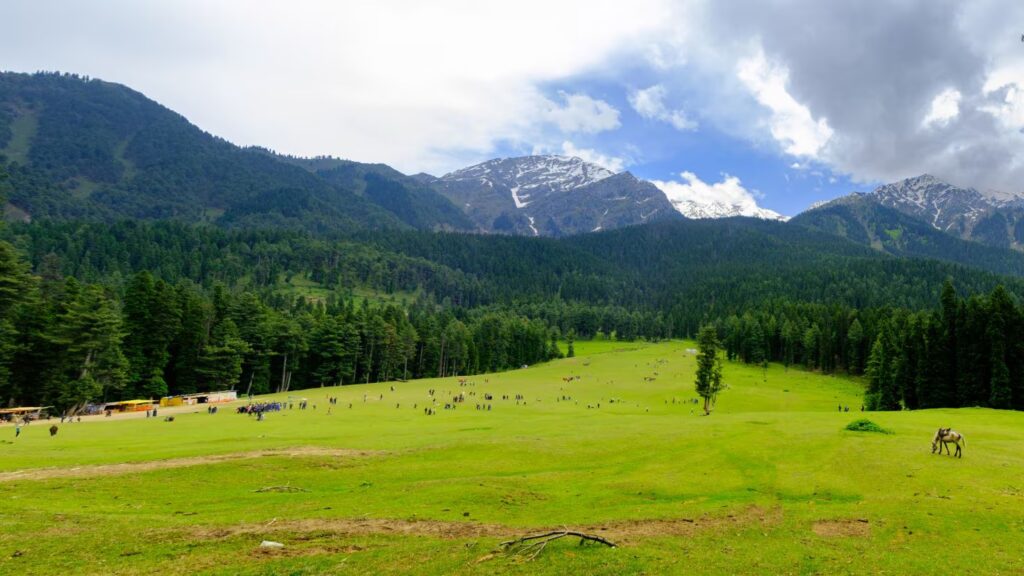
On April 22, 2025, the Baisaran Valley near Pahalgam — a meadow so green and peaceful that locals call it “mini Switzerland” — became the site of the deadliest terrorist attack on Indian civilians since the 2008 Mumbai attacks.
The Pahalgam attack one year anniversary falls today. And in the twelve months since, India has fought a military conflict, suspended a 65-year-old water treaty, rebuilt a tourism sector from near collapse, and fundamentally changed how it responds to cross-border terrorism.
This is the full story — what happened that afternoon, what India did next, and what has changed in the year since because of Pahalgam attack.
April 22, 2025: What Happened in Pahalgam
It was a Tuesday afternoon, around 2:30 PM.
Hundreds of tourists — families, honeymooners, students — were enjoying the Baisaran meadow, accessible only by foot or pony from Pahalgam town in Anantnag district, Jammu and Kashmir. The valley sits at 2,400 metres above sea level, surrounded by dense pine forests. No road access. No quick escape route.
At least three armed terrorists emerged from the surrounding forests, carrying M4 carbines and AK-47s. According to eyewitness accounts reported across multiple news organisations, the attackers asked tourists to identify their religion before opening fire. Those who identified as Hindu were shot at point-blank range.
26 people were killed. 25 were Hindu tourists from across India — Uttar Pradesh, Haryana, Karnataka, Maharashtra, Assam. One was a Nepali citizen. One local Muslim pony operator named Syed Adil Hussain Shah — a 28-year-old father who tried to physically confront the attackers to save a woman — was shot in the chest and neck. He died on the spot.
Among the dead was Lieutenant Vinay Narwal of the Indian Navy, who had married just six days earlier on April 16. He and his wife Himanshi were on their honeymoon.
The Resistance Front (TRF) — widely believed to be a shadow outfit of the Pakistan-based Lashkar-e-Taiba — initially claimed responsibility. They later retracted the claim, alleging their platforms had been hacked. India’s National Investigation Agency named TRF head Sajad Ahmad Sheikh, who lives in Pakistan, as a key mastermind.
The Pahalgam attack was not random. It was strategically timed during Kashmir’s peak tourist season — a deliberate attempt to destroy the narrative of normalcy that had been building since the region’s assembly elections in October 2024. It was also designed to provoke communal violence within India by specifically targeting Hindus.
Neither objective succeeded.
India’s Immediate Response: 5 Decisions in 24 Hours – Pahalgam attack one year anniversary
Prime Minister Narendra Modi was in Saudi Arabia when the attack happened. He cut short his visit, returned to Delhi, and chaired an emergency meeting of the Cabinet Committee on Security (CCS) the same evening.
On April 23, 2025 — within 24 hours of the attack — India announced five sweeping measures:
1. Indus Waters Treaty Suspended The 1960 Indus Waters Treaty — which had survived three wars between India and Pakistan, the Kargil conflict, and decades of terror attacks without ever being suspended — was put in abeyance. Foreign Secretary Vikram Misri declared it would remain suspended “until Pakistan credibly and irrevocably abjures its support for cross-border terrorism.” This was the first time in 65 years the treaty had been disrupted.
2. Attari Border Post Closed The Attari-Wagah border crossing — the main land crossing between India and Pakistan — was shut.
3. Pakistani Military Attachés Expelled India expelled Pakistani military attachés from its territory and asked India to reduce its diplomatic staff in New Delhi.
4. SAARC Visas Cancelled All SAARC visas for Pakistani nationals were cancelled with immediate effect.
5. Diplomatic Downgrade Both countries agreed to reduce the staff strength of their respective high commissions — a significant downgrade in bilateral diplomatic relations.
Modi addressed the nation at the National Panchayati Raj Day event in Madhubani, Bihar, on April 24 and issued a direct warning: “Those terrorists who have carried out this attack and those who conspired for this attack will get a punishment bigger than they could have ever imagined.”
That was not an empty threat.
Operation Sindoor: India Strikes Pakistan- Pahalgam attack one year anniversary
On the night of May 6–7, 2025 — exactly 15 days after the Pahalgam attack — India launched Operation Sindoor.
The name was deliberate. Sindoor is the red mark worn by married Hindu women — a tribute to the widows of Pahalgam, including Himanshi Narwal who had lost her husband on their honeymoon.
The operation was led by two women officers of the Indian Armed Forces: Colonel Sophia Qureshi and Wing Commander Vyomika Singh.
What India Struck
Indian Air Force jets used French-made SCALP-EG cruise missiles and BrahMos supersonic missiles to strike nine sites across Pakistan and Pakistan-administered Kashmir — including:
- The alleged Lashkar-e-Taiba headquarters in Muridke, Punjab, Pakistan
- Jaish-e-Mohammed infrastructure in Bahawalpur, Punjab, Pakistan
- Multiple terror launch pads in Pakistan-administered Kashmir
The strikes lasted 23 minutes. India’s Defence Ministry stated they were “focused, measured and non-escalatory in nature” and that no Pakistani military facilities or civilians were targeted. These were described as the most extensive Indian strikes inside Pakistan since the 1971 war.
Defence Minister Rajnath Singh said at least 100 militants were killed in the strikes.
Pakistan’s Response
Pakistan condemned the strikes as “an unprovoked and blatant act of war” and launched its own operation — Operation Bunyan-un-Marsoos — targeting Indian military bases on May 10. Pakistan attacked airbases in Adampur and Punjab. India responded by expanding Operation Sindoor to target Pakistani Air Force infrastructure.
This became the first drone battle between two nuclear-armed nations in history.
Ceasefire
On May 10, 2025 — four days after the conflict began — Pakistan’s Director General of Military Operations called the Indian DGMO. A ceasefire was agreed, effective from 5:00 PM IST on May 10. US President Donald Trump claimed credit for mediating the ceasefire, though India officially denied third-party involvement in the agreement.
After the ceasefire, Indian teams visited 33 countries to present evidence of Pakistan’s links to the Pahalgam attack and build global support.
The 12 Months Since: What Has Changed
The Pahalgam attack one year anniversary arrives with India transformed in several significant ways. Here is what has changed:
1. India’s Counter-Terror Doctrine Changed Permanently
Before Pahalgam, India’s response to terror attacks had been diplomatic pressure, limited surgical strikes, or cross-LoC operations. Operation Sindoor went far deeper — striking targets inside Pakistan’s heartland Punjab province for the first time since 1971.
The message was unmistakable: India will no longer limit its response to the Line of Control. The red line has moved.
2. Indus Waters Treaty Remains Suspended
As of April 2026, the Indus Waters Treaty is still in abeyance. India has accelerated hydroelectric projects in Jammu and Kashmir — with the government stating that J&K hydropower capacity will rise by 46% under the suspension period. For Pakistan, which depends on the Indus system for 80% of its agriculture, this is a significant long-term pressure.
3. Kashmir Tourism Slowly Recovering
Immediately after the Pahalgam attack, the damage to Kashmir’s tourism sector was devastating. 80% of tourist bookings were cancelled and 48 tourist destinations were shut. The valley went from a record tourism year in 2024 to near-total collapse in weeks.
But one year on, tourists are returning. Pahalgam itself has visitors again — coming not just despite what happened, but in some cases because of it, as an act of solidarity. The Federal reported tourists from Assam at Pahalgam on the anniversary saying: “If we choose not to visit this place now, that would be wrong.”
Security has been dramatically enhanced — digital tracking systems, increased military presence, and new protocols for tourist areas across the Valley.
4. India-Pakistan Relations at Historic Low
The Attari border remains closed. Diplomatic missions remain understaffed. SAARC visas remain cancelled. The two countries have not resumed normal bilateral dialogue. Pakistan has denied any involvement in the attack — a position India and most of the international community do not accept.
5. A New Level of National Security Consciousness
Civil defence drills were conducted across India in the months following the attack. The Indian Army raised new offensive formations — the Bhairav Battalions. India accelerated indigenous defence production, demonstrating BrahMos capabilities to the world during Operation Sindoor. Air defence systems were upgraded. The drone warfare lessons from the May conflict are being actively incorporated into India’s military doctrine.
6. The Victims’ Families Still Grieve
Beyond all the geopolitics, all the military doctrine, and all the diplomatic shifts — there are 26 families in India who are marking this anniversary not as a turning point in national policy but as the one-year reminder of the worst day of their lives.
The father in Karnal who lost his young son. The mother in Mumbai who will never watch her son get married. Himanshi Narwal, who became a widow at her honeymoon destination before her first week of marriage was over.
PM Modi said on today’s anniversary that “India will never bow to any form of terror and the heinous designs of terrorists will never succeed.” That resolve matters. But so does the grief of 26 families — which no military operation, no diplomatic success, and no policy change can heal.
One Year On: The Bigger Question
The Pahalgam attack one year anniversary forces India to ask a harder question than just “what did we do in response.”
The harder question is: has anything fundamentally changed in the conditions that produce these attacks?
Pakistan’s military establishment, by most credible assessments, continues to support groups like Lashkar-e-Taiba and Jaish-e-Mohammed. The Kashmir Valley remains a target for radicalization by Pakistan-sponsored networks. The Line of Control remains porous. And the nuclear overhang means full-scale military resolution is not an option.
Operation Sindoor demonstrated that India has both the capability and the political will to strike deep inside Pakistan in response to major terror attacks. That changes the calculus. But it does not by itself end the conditions that produce attacks like Pahalgam.
The real measure of whether India has truly changed after the Pahalgam attack one year anniversary is not what happened between May 7 and May 10, 2025. It is whether the next attack — if and when it comes — is the last one, or merely the next chapter in a cycle that India and its neighbors have not yet found a way to break.
Key Timeline: Pahalgam to Operation Sindoor
| Date | Event |
|---|---|
| April 22, 2025 | Pahalgam attack — 26 killed in Baisaran Valley |
| April 23, 2025 | India suspends Indus Waters Treaty, closes Attari border |
| April 24, 2025 | PM Modi’s warning — “punishment bigger than they imagined” |
| May 7, 2025 | India launches Operation Sindoor — 9 terror camps struck |
| May 10, 2025 | Pakistan launches Operation Bunyan-un-Marsoos |
| May 10, 2025 | Ceasefire agreed — 5:00 PM IST |
| June 2025 | India teams visit 33 countries with evidence |
| July 2025 | Operation Mahadev — 3 Pakistan-linked terrorists killed in Kashmir |
| January 2026 | Operation Trashi 1 — JeM terrorists killed in Kishtawar |
| April 22, 2026 | Pahalgam attack one year anniversary |
Also read: Delimitation Bill 2026: What It Is, Why It Failed & South India’s Fear Explained · India’s Tech Dependence on USA: Why It Must End
Sources: Wikipedia — 2025 Pahalgam Attack · Wikipedia — 2025 India-Pakistan Crisis · PIB India — Operation Sindoor · The Federal — One Year Anniversary · Britannica — Indus Waters Treaty · US Library of Congress — India-Pakistan Conflict

I am an independent analyst and contributor at India2040, covering the intersection of Indian politics, economy, and public policy. I focus on electoral affairs, government policy, and India’s long-term growth story, with the aim of making complex national developments accessible to a wider audience. I am based in Gujarat and have been closely following Indian political and economic developments for several years. For queries or story tips, you can reach me at rohit@india2040.com
About The Author