
Who Is Balen Shah? Nepal’s New Prime Minister in 2026 — Everything You Need to Know
Last Updated on May 29, 2026 2:39 pm by India2040 Admin
Imagine electing a rapper as your country’s Prime Minister.
That’s exactly what Nepal did in 2026 — and the world is watching.
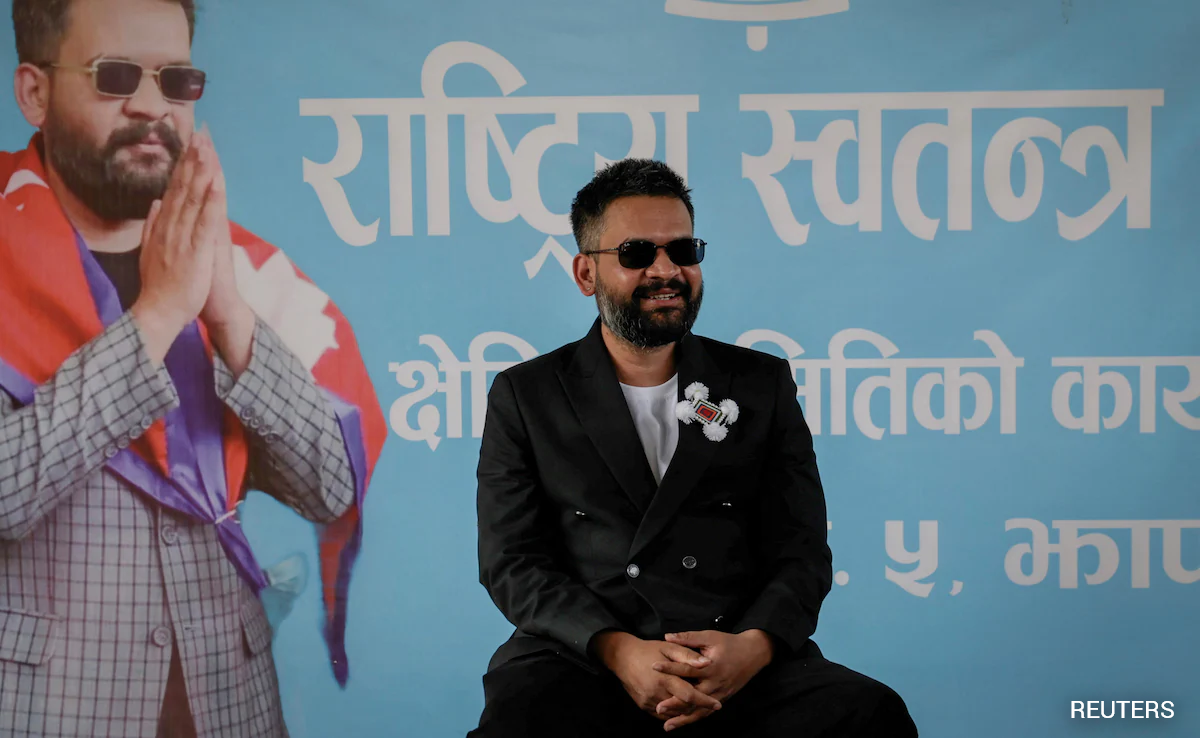
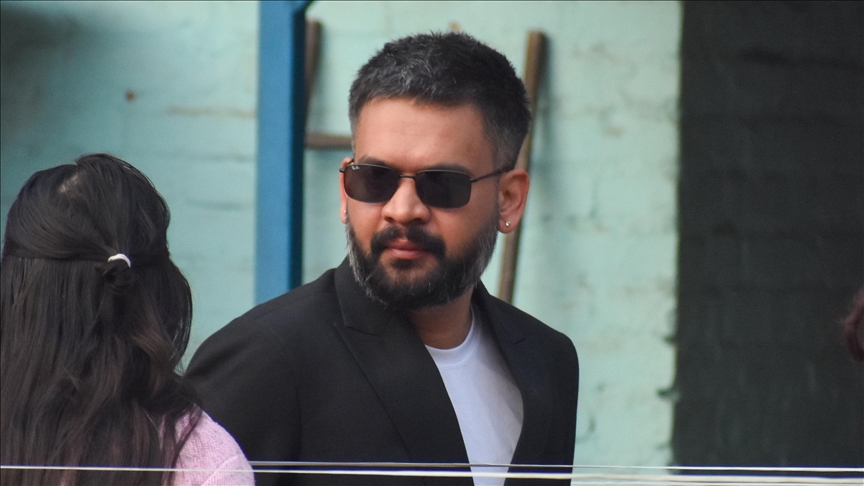
Balendra Shah, known simply as Balen, became Nepal’s Prime Minister on 27 March 2026. He is 35 years old. He is a structural engineer by training, a rapper by passion, and now the most powerful politician in a country of 30 million people.
His story is not just interesting. It says something important about where South Asia is heading — and what happens when young people finally get fed up with old politicians.
This article covers everything you need to know: who Balen Shah is, how he became Prime Minister, what he promises to do, and what his rise means for India.
Who Is Balen Shah? The Man Behind the Headlines
Before he became Prime Minister, most people in Nepal knew Balen Shah for his music.
Born on 27 April 1990 in Kathmandu, Shah grew up in Nepal’s capital and eventually graduated as a structural engineer — studying both in India and Nepal. But his real passion was always music. He became a prominent figure in Nepal’s underground hip-hop scene, rapping about corruption, inequality, and the frustration of ordinary Nepali youth.
He was not a career politician. He had no party background. No political family name. No old connections.
That, it turns out, was his biggest advantage.
At age 35, he is now the world’s youngest serving state leader.
Quick profile:
| Full name | Balendra Shah |
| Born | 27 April 1990, Kathmandu |
| Education | Structural Engineering |
| Career before politics | Rapper, civil engineer |
| Mayor of Kathmandu | 2022–2026 |
| Political party | Rastriya Swatantra Party (RSP) |
| Became PM | 27 March 2026 |
| Spouse | Sabina Kafle |
How Did a Rapper Become Mayor — and Then PM?
Step 1: Winning Kathmandu’s Mayor Election (2022)
In 2022, something unusual happened in Nepal. A young man with no party backing entered the race for Mayor of Kathmandu — one of the most contested political positions in the country.
Balen was the first independent candidate to win the Kathmandu mayoral election in 2022, becoming the city’s 15th mayor after defeating candidates from well-established political parties. He won by a margin of over 61,000 votes.
As mayor, he didn’t just give speeches. He actually did things — waste management drives, traffic reforms, demolition of illegally constructed structures. Nepali youth loved him. Traditional politicians didn’t.
Step 2: The 2025 Gen Z Uprising
Nepal’s path to Balen Shah becoming PM runs directly through the streets of Kathmandu in 2025.
Balendra Shah’s rise to become Nepal’s prime minister followed the political upheaval of the 2025 Nepalese Gen Z protests, which led to the collapse of the existing government. The unrest weakened traditional parties and created an opening for new leadership.
The protests were sparked by anger over government corruption, a controversial social media ban, and rising unemployment. Young Nepalis took to the streets by the thousands. Then-Prime Minister KP Sharma Oli was forced to resign.
Balen supported the protests from day one. He stood with the youth — not against them.
Step 3: Joining RSP and Winning the 2026 Election
After the protests, Nepal held elections on 5 March 2026. Balen formally joined the Rastriya Swatantra Party (RSP) — a relatively new political party formed in 2022 specifically to challenge Nepal’s corrupt old guard.
Shah was officially elected to the House of Representatives from Jhapa-5 on 7 March 2026. According to the final results published by the Election Commission of Nepal, Shah secured 68,348 votes — the highest vote total ever recorded in Nepal’s parliamentary election history — surpassing the previous record of 57,139 votes set by Oli himself in the same constituency in 2017. Oli received 18,734 votes, giving Shah a winning margin of 49,614 votes.
He didn’t just win. He destroyed KP Sharma Oli — the very man the Gen Z protests had ousted — in his own constituency.
On 27 March 2026, Shah was sworn in as Nepal’s Prime Minister.
Why Young Nepalis Chose Him
This is the real story. Balen Shah didn’t win just because he was popular. He won because Nepal’s youth were done.
Done with the same faces. Done with the same promises. Done with corruption, unemployment, and governments that changed faster than seasons — Nepal has had 32 governments since 1990.
For the first 18 years of post-monarchy Nepal, the country had 14 prime ministers — leaders changing almost every year, with several taking office, being forced out, and then returning a few years later.
Balen represented something different. He spoke their language — literally and figuratively. He used social media. He addressed real problems during his time as mayor. He came from music and engineering, not from political dynasties.
TIME Magazine included Nepal’s Prime Minister Balen Shah in its 2026 list of the world’s 100 most influential people, featuring him alongside major global figures such as U.S. President Donald Trump and Chinese President Xi Jinping.
That kind of global attention is rare for a Nepali leader — and it reflects just how significant his rise is being seen internationally.
What Are His Key Priorities as PM?
Balen Shah’s government has outlined a 100-point agenda based on the RSP’s election manifesto. The broad priorities are:
Economic reform and jobs — Nepal’s unemployment crisis, particularly among youth, was a core reason for the 2025 protests. Creating stable employment is his government’s first test.
Anti-corruption governance — Shah built his entire career on the promise of transparency and accountability. As PM, that commitment now needs to be backed by real policy — not just speeches.
Infrastructure and urban development — His track record as Kathmandu’s mayor showed he is willing to make tough, unpopular decisions to improve cities. This approach is expected to scale nationally.
Foreign policy balance — The RSP’s election manifesto called for Nepal to become a “vibrant bridge” between India and China — a pragmatic but delicate position given Nepal’s geography.
On home turf, Nepal’s Prime Minister seems to be earning big on the 100-point agenda based on his party’s manifesto rolled out before the polls.
What Does Balen Shah’s Rise Mean for India?
For India, Nepal is never just a neighbour. It is a strategic priority. The two countries share an open border, deep cultural ties, and millions of people who cross freely every year.
PM Modi held a warm telephone conversation with Shah and RSP Chairman Rabi Lamichhane, conveying India’s commitment to mutual prosperity and expressing confidence that India-Nepal relations in 2026 would scale new heights. The speed of that outreach was itself a diplomatic statement.
India moved fast. The same day Balen was sworn in, India extended an invitation for an official visit to New Delhi — a strong signal that India wants to build a good working relationship early.
The impending visit could herald a new phase of Nepal-India relations that is characterized by greater trust and cooperation.
However, it’s not all straightforward. The RSP has signalled interest in renegotiating the 1950 Treaty of Peace and Friendship — a treaty Nepal has long viewed as unequal. The Kalapani-Lipulekh-Limpiyadhura territorial dispute between India and Nepal also remains unresolved and politically sensitive.
The RSP’s election manifesto called for Nepal to become a “vibrant bridge” between India and China — a desire to derive benefit from both relationships rather than choosing between them.
For India, this means Balen’s Nepal will not be a pushover — but it is also not hostile. It will be a pragmatic, complex, and more self-confident neighbour.
The Challenges Ahead
Winning an election is one thing. Governing Nepal is another.
Political instability — Nepal’s history is brutal. 32 governments in 35 years. Even popular leaders have failed to complete their terms. Balen will need to hold his coalition together while managing opposition from the older parties he defeated.
Economic pressure — Nepal’s economy is heavily dependent on remittances from workers abroad and tourism. Youth unemployment remains high. The expectations of the Gen Z voters who brought him to power are enormous.
Managing his own party — As Prime Minister, Shah is expected to distance himself from Deputy Prime Minister Rabi Lamichhane’s legal woes. Lamichhane was recently released from jail after being detained in relation to allegations of misappropriation of funds in Nepal’s cooperative sector.
International balancing act — Nepal sits between India and China. Any move that appears too close to Beijing will alarm New Delhi, and vice versa. Walking that tightrope while also building a relationship with the United States — which has a $550 million infrastructure investment in Nepal — requires real diplomatic skill.
The Bigger Picture: A South Asia Trend
Balen Shah’s story is not just Nepal’s story.
Across South Asia, young voters are increasingly rejecting career politicians and demanding leaders who actually understand their lives. In India, youth unemployment and political cynicism are growing. In Bangladesh, street protests reshaped the government.
What Nepal just did — handing power to a 35-year-old rapper-engineer with no party background — is a signal of where democracy in this region is heading.
The age of career politicians inheriting power through party hierarchies is being challenged. Social media, youth activism, and the demand for real accountability are reshaping politics — not just in Nepal, but across the region.
Whether Balen Shah succeeds or fails in office, his rise has already changed something. He has shown young people across South Asia that the door to power is not permanently locked to outsiders.
Also Read (Internal Links)
- 🔗 India’s Tech Dependence on USA: Why It Is a Problem & What India Must Build Now
- 🔗 Delimitation Bill 2026: What It Is, Why South India Is Furious & What Happens Next
- 🔗 The Future of Indian Politics: Trends and Predictions
- 🔗 India Slipped to 6th Largest Economy: Temporary Setback or Bigger Concern?
External Sources
- Al Jazeera — Now in Power, Nepal’s Rapper-Politician Faces New Challenge
- Britannica — Balendra Shah Biography
- TIME Magazine — What to Know About Balendra Shah
- The Diplomat — Nepal’s New PM Faces First Diplomatic Test With India Visit
- Wikipedia — Balen Shah
- Fiscal Nepal — Balen Shah Named in TIME’s 100 Most Influential People
📢 Disclaimer: This article is published for informational and educational purposes only. India2040 presents a balanced, fact-based overview sourced from publicly available reporting and credible international media. We do not endorse or oppose any political party, leader, or government. All facts cited are drawn from published sources including Al Jazeera, Britannica, TIME Magazine, and The Diplomat. Readers are encouraged to verify information independently and form their own views. India2040 is an independent media publication and is not affiliated with any political organisation in India or Nepal.

I am an independent analyst and contributor at India2040, covering the intersection of Indian politics, economy, and public policy. I focus on electoral affairs, government policy, and India’s long-term growth story, with the aim of making complex national developments accessible to a wider audience. I am based in Gujarat and have been closely following Indian political and economic developments for several years. For queries or story tips, you can reach me at rohit@india2040.com
About The Author