
UPI Accepted Countries 2026: The Complete Updated List

Last Updated on April 23, 2026 10:37 am by Rohit Gadhia
Picture this. You land in Singapore, walk into a food court, and pay for your chicken rice by simply scanning a QR code with your PhonePe app. No cash. No currency exchange. No credit card. Just your Indian bank account — and done.
That is not a dream. That is UPI in 2026.
India’s Unified Payments Interface — better known as UPI — has quietly become one of the most remarkable financial innovations the world has ever seen. And now, it is going global.
This article gives you the complete, updated list of UPI accepted countries in 2026, how the expansion happened, what it means for Indian travellers and NRIs, and how you can use UPI the next time you travel abroad.
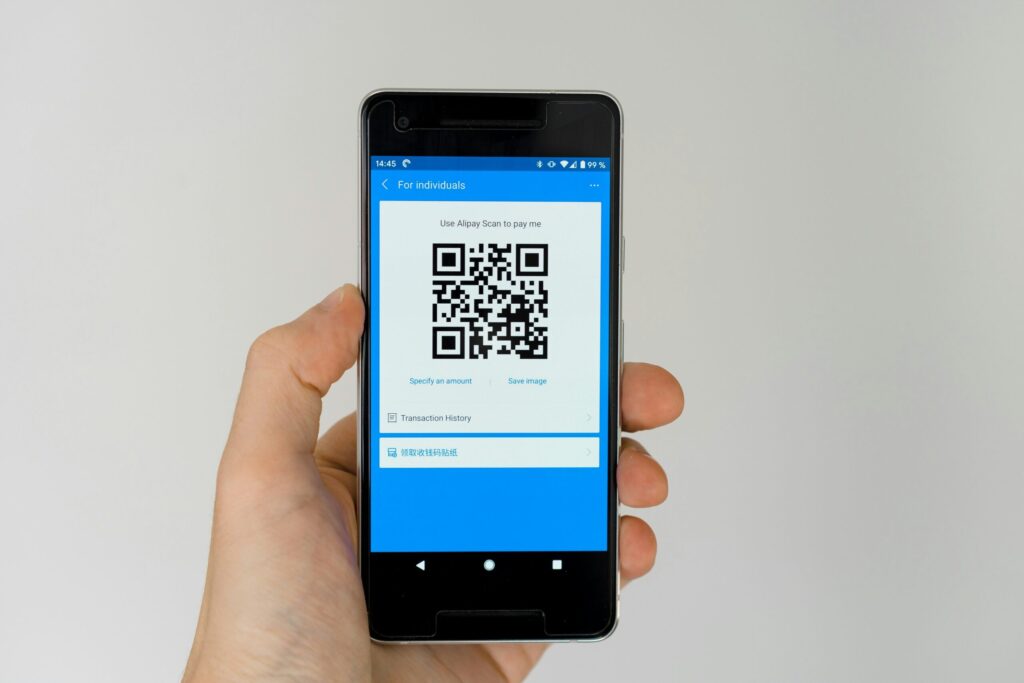
What Is UPI and Why Does It Matter?
Before we get to the list of UPI accepted countries in 2026, let us quickly understand what makes UPI special.
UPI is a real-time payment system built by the National Payments Corporation of India (NPCI) and launched in 2016. It lets you send and receive money instantly — 24/7, 365 days a year — directly between bank accounts using just a mobile phone.
The numbers tell the story better than any description:
- UPI processed 21.63 billion transactions in December 2025 — the highest ever monthly volume on any payment system in the world
- In March 2026, UPI hit ₹29.52 lakh crore (₹29.5 trillion) in a single month — another all-time record
- UPI now accounts for 80–90% of India’s retail digital payments
- The total transaction volume in 2025 was 228.3 billion — up 29% from 2024
To put that in perspective: UPI now processes more real-time digital transactions than the United States, United Kingdom, and Europe combined.
That is why the world is paying attention. And that is why UPI accepted countries in 2026 is a question millions of Indians — at home and abroad — are asking.
Full List: UPI Accepted Countries in 2026
Here is the complete, updated list of countries where UPI payments are accepted in 2026, along with how it works in each:
🇧🇹 Bhutan — The Pioneer
Bhutan was the first country outside India to accept UPI payments, launched in 2021. NPCI International and the Royal Monetary Authority of Bhutan worked together to bring UPI through the BHIM app. Indians visiting Bhutan can pay at local shops, cafes, and tourist spots by scanning QR codes — just like they do at home.
🇳🇵 Nepal — Integrated With Local Systems
Nepal has integrated UPI directly with its national payment systems. Indian travellers and the millions of Nepali workers sending money between the two countries now have a simple, instant way to transact. This is especially significant given the enormous volume of remittances between India and Nepal.
🇸🇬 Singapore — Linked With PayNow
Singapore has one of the most advanced UPI integrations. UPI is linked with Singapore’s PayNow system, and is accepted at over 8,000 to 30,000+ merchants across the city-state. For Indian professionals, students, and tourists in Singapore — one of the most popular Indian diaspora destinations — this is a genuine game-changer.
🇦🇪 UAE — 60,000+ Outlets
The UAE is home to one of the largest Indian communities in the world — over 3.5 million Indians live there. UPI is accepted at over 60,000 retail outlets via NeoPay in the UAE. Whether you are shopping in a Dubai mall or paying at a neighbourhood grocery store in Abu Dhabi, UPI works.
🇫🇷 France — First European Country to Accept UPI
France made history as the first European country to accept UPI, launched through a partnership between NPCI International (NIPL) and Lyra, a French payments company. UPI started at tourist-heavy locations — including the Eiffel Tower area — and has expanded to retail stores and restaurants across Paris and other cities.
🇲🇺 Mauritius — Full Integration
Mauritius launched UPI and RuPay services in 2024. For Indian tourists visiting this popular holiday destination, UPI removes the need to carry foreign currency for day-to-day purchases.
🇱🇰 Sri Lanka — Airports and Retail
Sri Lanka accepts UPI at airports and retail outlets across the country. Given the strong trade and tourism ties between India and Sri Lanka, this has been a logical expansion.
🇨🇾 Cyprus — Newest European Addition
Cyprus was added in 2025 following Indian Prime Minister’s visit, becoming the second European country to accept UPI. UPI is now available at retail stores and restaurants in Cyprus — a further push into Europe for India’s payment system.
🇹🇭 Thailand — Live in 2026
Thailand joined the UPI accepted countries 2026 list, catering to the massive volume of Indian tourists who visit Bangkok, Phuket, and Chiang Mai every year. This is one of the most practically useful additions for Indian travellers.
Countries Where UPI Is Coming Soon
The list of UPI accepted countries in 2026 is not final — it is growing. Here are the countries currently in progress:
| Country | Status |
|---|---|
| Malaysia | Expected rollout underway |
| Qatar | Targeted for expansion |
| United Kingdom | Ongoing rollout at select merchants |
| Oman | MoU signed, integration in progress |
| Indonesia | Discussions underway |
| Maldives | Partnerships in progress |
NPCI International Payments Limited (NIPL), the body responsible for taking UPI global, has been focused on expanding UPI to countries most relevant to Indian tourists and the Indian diaspora. According to Business Standard, NIPL is targeting four to six additional countries in 2025–26, prioritising Southeast Asia and the Gulf region.
NRIs living in Australia, Canada, France, Hong Kong, Malaysia, Oman, Qatar, Saudi Arabia, Singapore, UAE, UK, and USA can already use UPI to make transactions to India through their registered overseas mobile numbers.
Why Is UPI Going Global? The Bigger Story
Understanding why UPI accepted countries in 2026 is a growing list requires understanding India’s larger ambition.
UPI’s global expansion is not just about making it easier for Indian tourists to pay for their chai in Singapore. It is a strategic move with several dimensions:
Reducing dependence on Western payment systems. Visa and Mastercard dominate global payments and charge fees that flow primarily to American companies. UPI offers countries an alternative that is cheaper, faster, and not controlled by any Western corporation. Several countries are genuinely interested in building their own UPI-style systems.
Supporting India’s de-dollarisation goals. As India pushes to conduct more trade in rupees rather than dollars, having a payment infrastructure that supports rupee transactions globally is a strategic necessity.
Empowering the Indian diaspora. There are over 32 million Indians living abroad. A payment system that connects them seamlessly to India — for sending money home, paying for services in India, or simply transacting while they visit — has enormous economic value.
Fintech diplomacy. India has been actively promoting UPI as a template for other developing nations. Countries like Brazil, Saudi Arabia, and the Philippines have studied India’s UPI model. The G20, under India’s 2023 presidency, endorsed UPI-style systems as a model for global financial inclusion.
The Bank for International Settlements (BIS) and the Monetary Authority of Singapore cite UPI as a template for “balancing financial stability with global openness.” That is high praise from the world’s most respected financial institutions.
UPI vs the World: How Does India Compare?
Here is a quick look at how UPI stacks up against other major digital payment systems globally:
| Payment System | Country | Monthly Transactions (2025 peak) |
|---|---|---|
| UPI | India | 21.63 billion |
| PIX | Brazil | ~5 billion |
| Alipay | China | ~3 billion |
| PayPal | USA | ~2 billion |
| FPS (Faster Payments) | UK | ~600 million |
UPI is not just ahead. It is in a different league entirely.
How to Use UPI Abroad: Step-by-Step Guide
Knowing which UPI accepted countries exist is only half the picture. Here is exactly how to activate and use UPI when you travel:
Step 1: Activate UPI International Before You Travel
On PhonePe: Open PhonePe → Tap your profile picture → Payment Settings → UPI International → Tap “Activate” next to your bank account → Enter your UPI PIN.
On Google Pay: Open Google Pay → Tap “Scan QR Code” → Scan an international merchant’s QR code → Enter the amount in foreign currency → Tap “Activate UPI International” when prompted.
On BHIM: Open BHIM → Go to Profile/Settings → Enable UPI International → Confirm with your UPI PIN.
Step 2: At the Merchant — Just Scan and Pay
Once activated, using UPI abroad is exactly the same as using it in India. Look for the UPI QR code at the merchant. Scan it. Enter the amount. Confirm with your UPI PIN. Done.
The currency conversion happens automatically. You will see the INR amount being debited from your Indian bank account, along with any applicable forex fee charged by your bank.
Step 3: Know the Limits and Fees
- Daily transaction limit: Usually up to ₹1 lakh per day (check with your bank)
- Forex charges: Varies by bank — typically a small percentage of the transaction amount. Still usually cheaper than credit card foreign transaction fees
- Activation validity: On Google Pay, UPI International activation lasts 7 days and must be renewed
Important: Only banks that support UPI International will allow this feature. Check with your bank before travelling. Most major Indian banks — SBI, HDFC, ICICI, Axis, Kotak — support it.
What This Means for India’s Future
The expansion of UPI accepted countries in 2026 is one chapter in a much larger story.
PwC projects 1 billion UPI transactions per day by FY27. NPCI’s own target is equally ambitious. If achieved, UPI would process more transactions daily than any payment system in the world — including China’s Alipay and WeChat Pay combined.
India is building something the world has never seen: a digital payments infrastructure that is open, instant, free to use, and now going global. A vegetable vendor in Varanasi and an Indian professional in Singapore are both using the same system. That is remarkable.
For India2040, the UPI story is central to understanding where India is heading. This is not just a technology story. It is an economic sovereignty story, a financial inclusion story, and a soft power story — all wrapped in one mobile app.
The next time you travel and scan a QR code abroad with your phone, remember: that moment is the result of ten years of India building something the world is now watching and copying.
Also Read — From India2040
- 🔗 India Economy by 2040: Will It Really Become a $10 Trillion Powerhouse?
- 🔗 India’s Tech Dependence on USA: Why It Is a Problem & What India Must Build Now
- 🔗 India Slipped to 6th Largest Economy: Temporary Setback or Bigger Concern?
- 🔗 Vande Bharat Trains: Are They Changing Indian Railways?
- 🔗 Tata Semiconductor Plant in Dholera: India’s First Chip Factory Explained
External Sources
- NPCI — UPI Product Overview
- Business Standard — NPCI International to Expand UPI to 4–6 New Countries
- Elets BFSI — UPI Smashes Records with 21.6 Billion Transactions in December 2025
- Meetanshi — UPI Statistics 2026
- Hero FinCorp — List of Countries Accepting UPI Payments 2026
- BillCut — UPI in New Countries: Tourist Hotspots First
- InvestMates — How NRIs Can Activate UPI with International Number
- India TV News — How to Activate UPI International on PhonePe, Google Pay & BHIM
📢 Disclaimer: This article is published for informational purposes only. The list of UPI accepted countries and features is based on publicly available data as of April 2026 and may have changed since publication. Transaction limits, forex charges, and UPI International availability depend on your specific bank’s policies. Always check with your bank before travelling. India2040 is an independent media publication and is not affiliated with NPCI, any bank, or any payment company. This article does not constitute financial advice.

I am an independent analyst and contributor at India2040, covering the intersection of Indian politics, economy, and public policy. I focus on electoral affairs, government policy, and India’s long-term growth story, with the aim of making complex national developments accessible to a wider audience. I am based in Gujarat and have been closely following Indian political and economic developments for several years. For queries or story tips, you can reach me at rohit@india2040.com
About The Author